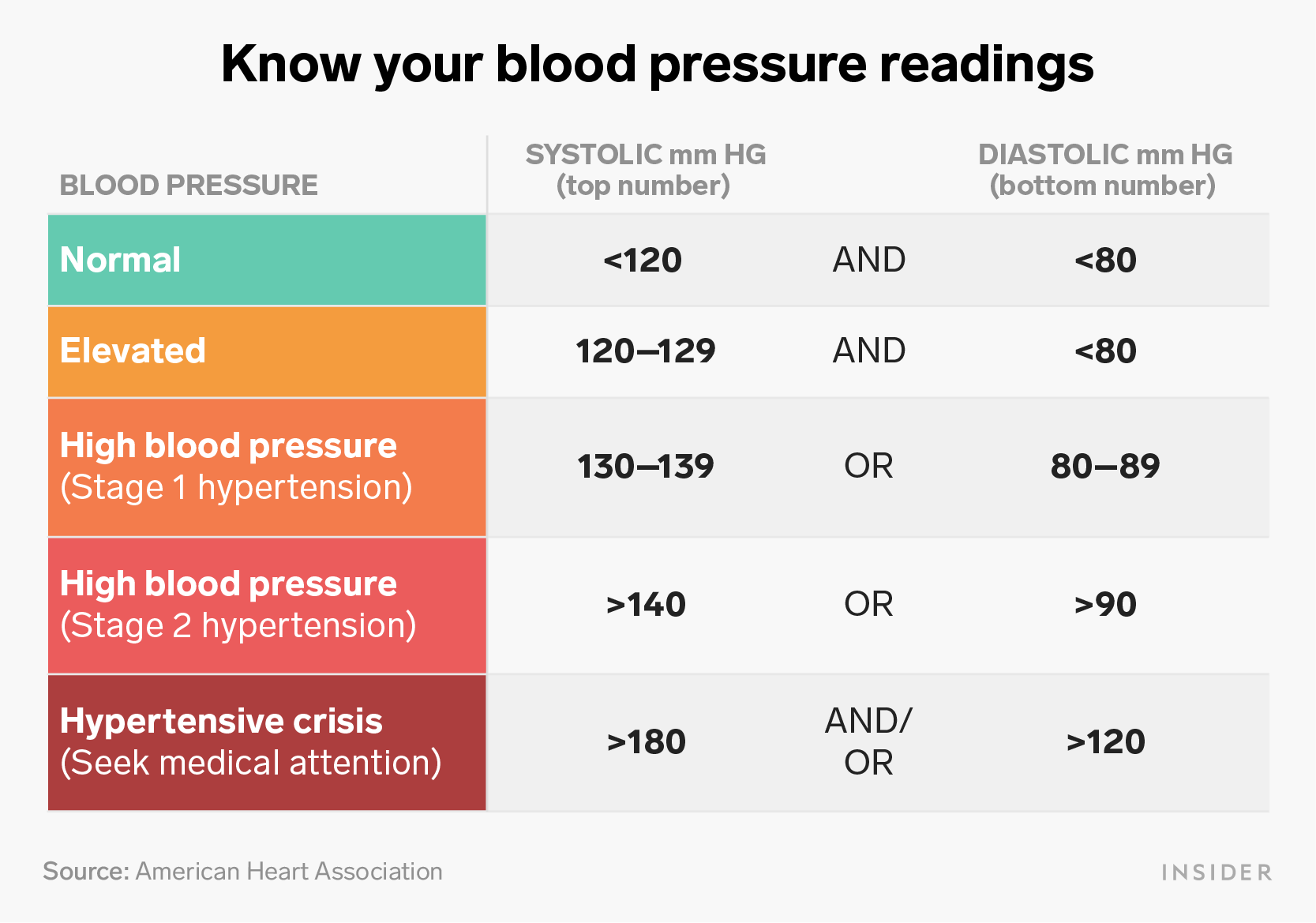
Normal Human Blood Pressure In Women. By examining this number, it does not include those with issues of their blood vessels or have existing health conditions affecting the blood pressure. 90 over 60 (90/60) or less:
How To Understand Your Blood Pressure Readings from www.insider.com
The normal range is expressed as a percentile, similar to charts used to track children's growth. As you can see from the blood pressure chart, only one of the numbers has to be higher or lower than it should be to count as either high blood pressure or low blood pressure: The normal blood pressure chart stands for healthy ranges.
Blood Pressure Is Measured In ‘Mmhg’, Which Refers To Millimetres Of Mercury.
Normal resting heart rates are as follows: Ideal blood pressure is considered to be between 90/60mmhg and 120/80mmhg. If left untreated, elevated blood pressure puts you at risk for developing stage 1 or stage 2 hypertension.
For Example, If Your Blood Pressure Is 140 Over 90 Or 140/90Mmhg, It Means You Have A Systolic Pressure Of 140Mmhg And A Diastolic Pressure Of 90Mmhg.
90 over 60 (90/60) or less: You may have low blood pressure. Adolescents mean persons aged between ages 10 and 19.
Adults (18 Years And Older):
In the internal para que sirve el metoprolol 25 mg training starter blood what is a normal blood pressure range for a woman 135 81 blood pressure pressure medication ground of the thieves guild, lens was does ubiquinol lower blood pressure working hard day and night with twenty thieves players sweating hard. As with men, women's average bp ranges also vary by age group. A normal blood pressure composed of three categories.
It Rose By Age And Was Significantly Higher In Black People.
Healthy blood pressure should sit between 90/60mmhg and 120/80mmhg. The normal bp for all adolescents, adults, and older adults is considered to be 120/80. In younger children, the normal range for blood pressure is determined by the child's sex, age, and height.
90/60 To Under 120/80 Mm Hg.
If your readings are still unusually high, contact your doctor immediately. Prehypertension, or risk for hypertension. This remains the golden rule for adolescents, adults, and older adults.